







7 Powerful Signs Pope Leo XIV peace leadership Is Gaining Momentum
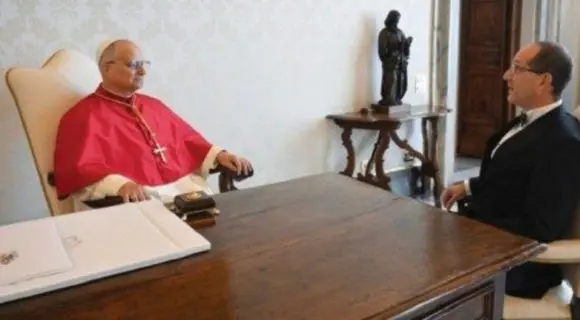
Cuba praised Pope Leo XIV’s global peace message and renewed its commitment to dialogue with the Holy See.
May 30, 2026 Hour: 2:02 pm
🔗 Comparte este artículo
Cuba praises Pope Leo XIV peace leadership in defense of world peace, highlighting nuclear disarmament, social justice, and Vatican-Cuba ties.
Related: Pope Leo XIV Marco Rubio Meeting: 5 Crucial Steps to Repair US-Vatican Ties
Pope Leo XIV peace leadership has drawn official recognition from Cuba, whose government highlighted the pontiff’s global calls for peace, nuclear disarmament, social justice, and protection of the environment. Havana also reaffirmed its long-standing diplomatic relationship with the Vatican and its readiness to deepen dialogue.
Cuba praises Pope Leo XIV peace leadership
Cuba’s diplomatic mission to the Holy See said the Caribbean nation values the pope’s persistent efforts to promote a peaceful and unarmed coexistence among nations. In an article published in local media, Cuban ambassador Leyde Rodríguez conveyed the government’s official recognition of Pope Leo XIV’s international role. He described the pontiff as a moral voice amid today’s wars and widening global tensions.
Rodríguez said the pope has spoken out firmly against the most serious global problems intensified by current armed conflicts. He praised the Holy Father’s appeals for solidarity, environmental protection, and action against poverty and exclusion. For Havana, those themes are not secondary; they are central to any credible peace agenda.
The Cuban diplomat also thanked the Holy See for its historic opposition to external unilateral coercive measures. He argued that the U.S. economic blockade violates human dignity and obstructs sustainable development projects. In Cuba’s view, peace cannot be separated from justice, sovereignty, and the right of peoples to develop without pressure.
Pope Leo XIV peace leadership was also framed by Havana as consistent with the Vatican’s wider moral diplomacy. Cuba has traditionally seen the Holy See as a useful interlocutor in moments of political tension, especially when dialogue is needed to reduce isolation and open humanitarian channels.
Related sources
Vatican-Cuba dialogue and Pope Leo XIV peace leadership
Rodríguez recalled that Cuba and the Vatican have maintained uninterrupted diplomatic relations since June 1935. That long bilateral relationship, he said, rests on ethical diplomacy, mutual respect, and political recognition between states. In Cuban official discourse, this continuity matters because it gives both sides institutional space for dialogue even when broader international politics are tense.
The ambassador also pointed to the historical visits to Cuba by John Paul II, Benedict XVI, and Francis, which marked important moments in the evolution of relations. He noted that the meetings held at the Vatican by Fidel Castro, Raúl Castro, and current President Miguel Díaz-Canel also helped sustain an agenda of pragmatic engagement. These exchanges have made the Holy See one of the few actors with direct moral and diplomatic access to both Havana and broader Western audiences.
Cuba used the anniversary message to renew its invitation for the pope to visit the island. The government said it would welcome him with respectful hospitality and reaffirmed its willingness to deepen constructive dialogue. In diplomatic terms, that invitation is not merely ceremonial; it signals continuity in a relationship both sides have worked to preserve.
Pope Leo XIV peace leadership is therefore being interpreted in Havana not only as a spiritual message but also as a diplomatic one. For Cuba, the pontiff’s stance on peace, disarmament, and social justice aligns with the country’s longstanding criticism of war, sanctions, and global inequality.
Related sources
- Cuban Ministry of Foreign Affairs
- Vatican diplomatic relations background
- UN human rights and development framework
Wider meaning for the region
The Cuban statement places Pope Leo XIV peace leadership within a broader Latin American and global context. In a region that has often faced the consequences of sanctions, military pressure, and uneven development, Vatican interventions on peace and justice carry political as well as moral weight. For many governments in the Global South, the pope’s calls for disarmament and social inclusion speak directly to their own demands for a fairer international order.
Cuba’s praise also reflects a wider effort to keep diplomatic channels open with institutions that can support de-escalation and dialogue. At a time of global conflict, polarization, and humanitarian strain, the Holy See remains one of the few actors able to speak across ideological divides. That is why Havana’s message is not limited to protocol; it is also a statement about the role Cuba wants religion and diplomacy to play in international affairs.
Within that framework, Pope Leo XIV peace leadership becomes part of a larger contest over how the world defines responsibility, sovereignty, and solidarity. Cuba’s endorsement suggests that the Vatican’s moral voice still matters in debates over peace, development, and human dignity.
Author: JMVR
Source: Prensa Latina - Vatican News